


The startup funding process can stall after a good meeting, even when an investor wants to proceed. Your next job is to find what still stands between that interest and cash in the company account. Before you hire against the promised round, check the steps that remain.
Suppose you expect ₹50 lakh next month. You have plans for two new hires and a product launch. However, the investor's team is still checking contracts, and nobody has agreed on the documents needed before payment.
A polite follow-up asking when the money will arrive may leave you in the same position. A list of open items, with an owner for each, gives both sides something they can act on. This guide helps first-time founders prepare that list and protect their cash while the round closes.
1. Know where you are in the startup funding process
First, label the stage accurately. Interest in your pitch means someone wants to explore the deal. It does not tell you whether their fund has approved the investment or whether all conditions for payment are complete.
Y Combinator's handshake protocol separates a commitment to invest from the later transaction, when documents and money change hands. The protocol describes a fundraising convention. Your Indian company's legal duties depend on its documents and applicable law.
Separate interest, terms, and cash
A term sheet sets out the proposed deal. The parties then work through checks and the detailed agreements. Signing those agreements can still leave conditions to satisfy before funds move.
| Stage | What you should establish |
|---|---|
| Investor interest | Who wants to proceed and what they still need to decide |
| Term sheet | Proposed terms, approvals still needed, and any binding clauses |
| Due diligence | What the investor is checking and which issues remain open |
| Detailed agreements | The rights, obligations, and payment conditions each party accepts |
| Closing | Required steps, approvals, and transfers under the agreed documents |
| Cash received | Funds credited to the company account and available under their terms |
The order can vary by deal. Some checks run in parallel, while multiple investors may close at different times. Therefore, ask for the actual sequence your investor and advisers expect to follow.
Also read the term sheet's legal effect. Some clauses may bind the parties even if the investment terms do not. If it restricts talks with other investors, have your lawyer explain the scope and end date before you sign.
Our equity dilution guide explains the ownership and rights questions to resolve alongside this work.
2. Prepare the records investors need to check
Due diligence is the review an investor uses to test the business and the proposed deal. A tidy folder saves time, but the documents must also agree with one another. If your pitch claims five paying customers, the contracts and receipts should explain that claim.
Startup India's funding guide describes due diligence as an investor check before a deal proceeds. Use the investor's own request list to plan the work. Your company stage and funding instrument will shape what they need.
Start with the cap table and company records. The cap table should show existing holders, option grants, and instruments that could create shares. Then reconcile it with the relevant records and signed agreements.
Next, gather accounts and bank statements. Keep tax records and outstanding liabilities alongside them, so the reviewer can follow the cash. Also separate actual sales from pilot interest or unpaid invoices.
Resolve ownership gaps before they block the round
Check who owns the product code, brand, and other key work. For example, a freelancer's invoice alone may leave questions about rights in software they built. Ask your lawyer to review the contract and any transfer of intellectual property rights.
Similarly, keep customer and supplier agreements together with amendments. Add employment and contractor records where they matter to the business. If the company relies on licenses or approvals, show their status and any limits.
For an AI venture, include the terms for major models, datasets, and tools you rely on. Explain how you handle customer data and what third parties can access. These dependencies may affect whether you can deliver what the pitch promises.
Use a data room, which is a controlled place to share deal documents. Give files clear names and keep one current version. Also limit access to what each reviewer needs, especially where records contain personal or confidential data.
3. Turn the startup funding process into a closing checklist
After the terms are clear, ask what must happen before each payment. Lawyers often call these requirements conditions precedent. In plain language, they are steps the deal requires before a party must complete the next action.
The list might include signed agreements, company approvals, corrected records, or a specified document from another party. Some tasks may depend on the investor. Therefore, do not put every item under the founder's name by default.
Startup India hosts an older India equity term-sheet template that illustrates due diligence and closing conditions. Use this dated template to learn the questions a closing checklist must answer. Your counsel should set the checklist from the actual transaction documents.
Make completion visible
Give each item a named owner and a due date. Then state what evidence will show that it is complete. Sending a draft agreement is a different status from getting every required signature.
| Open item | Owner | Evidence of completion |
|---|---|---|
| Reconcile share records | Founder and company adviser | Checked cap table agrees with records |
| Resolve a product ownership question | Founder and lawyer | Relevant parties sign the required document |
| Obtain investor's final approval | Investor's deal lead | Approval confirmed through the agreed process |
| Complete agreed company approvals | Company adviser | Required approvals documented |
| Confirm payment details | Company finance lead and investor | Details checked through a trusted channel |
| Complete first funding transfer | Investor and finance lead | Receipt confirmed in the company account |
These are illustrative items; they do not define a universal Indian closing sequence. Also track tasks due after closing, including records and filings your advisers identify. Cash receipt does not end every duty under the deal.
Before a transfer, verify account details through a trusted contact method. A late email that changes the bank account deserves a separate check. Keep sensitive payment details out of broad email chains.
4. Model delays and installments in the startup funding process
Consider a hypothetical Indian software startup with ₹12 lakh of usable cash today. It spends ₹4 lakh each month and collects ₹1 lakh from customers. The monthly cash gap is therefore ₹3 lakh.
The founders expect ₹50 lakh, but the checks and documents take longer than planned. If no funding arrives for three months, the closing cash falls to ₹3 lakh. That is also the minimum reserve the founders set for this example.
| Month without funding | Opening cash | Customer receipts | Payments | Closing cash |
|---|---|---|---|---|
| 1 | ₹12 lakh | ₹1 lakh | ₹4 lakh | ₹9 lakh |
| 2 | ₹9 lakh | ₹1 lakh | ₹4 lakh | ₹6 lakh |
| 3 | ₹6 lakh | ₹1 lakh | ₹4 lakh | ₹3 lakh |
| 4 | ₹3 lakh | ₹1 lakh | ₹4 lakh | ₹0 lakh |
The business reaches its reserve floor after month three. Waiting another month would use that reserve completely under these assumptions. Also check payment dates within each month, since payroll may fall due before a customer pays.
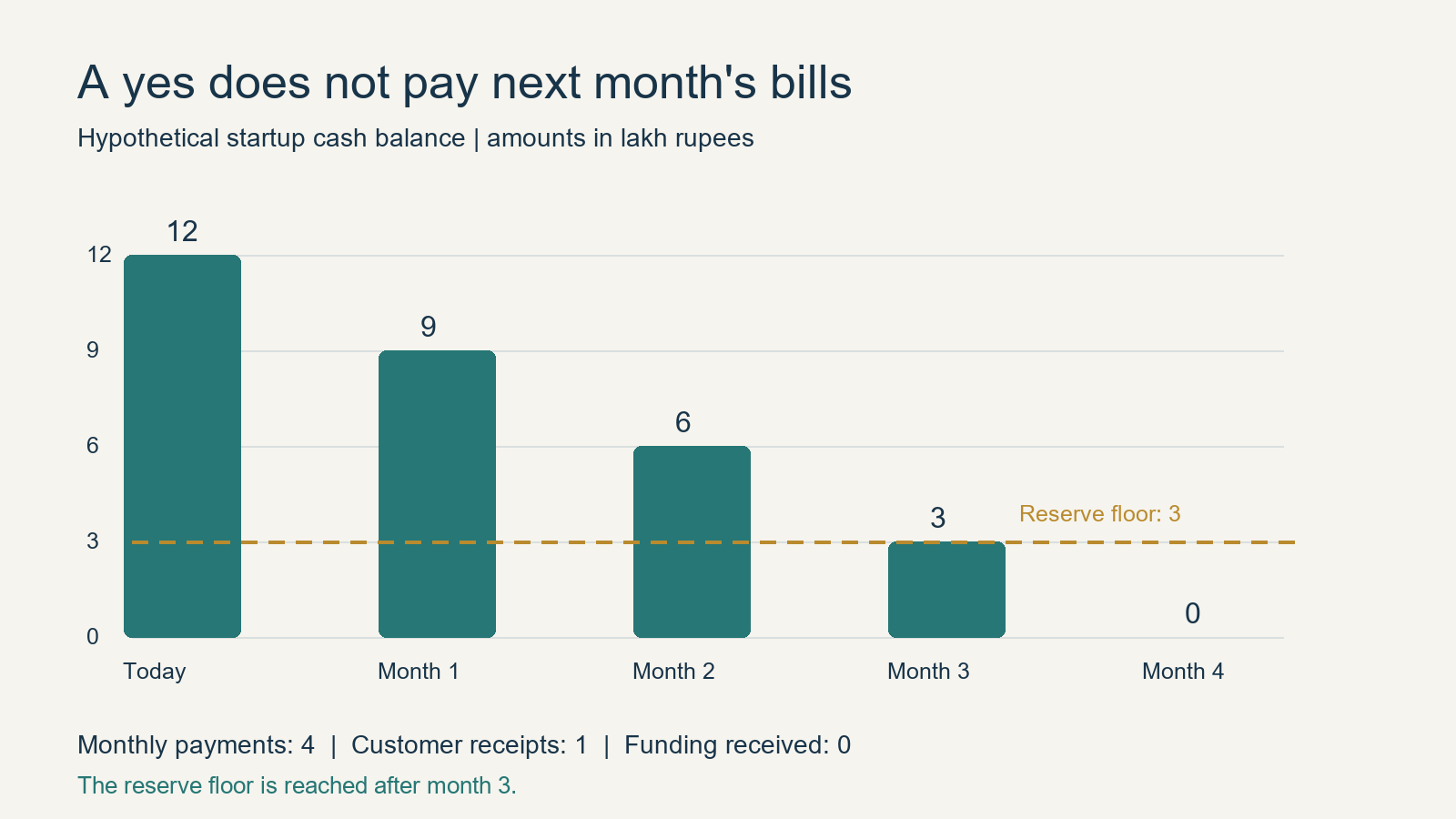
Hypothetical cash model: monthly payments ₹4 lakh, receipts ₹1 lakh, and no funding received.
Put each installment on its own line
Suppose the investor offers ₹20 lakh at closing and another ₹30 lakh after a product milestone. If the first amount arrives at the start of month four, cash rises from ₹3 lakh to ₹23 lakh. After that month's ₹3 lakh gap, the balance is ₹20 lakh.
The full ₹50 lakh is still not in the bank. Enter the second installment only in the scenario where its conditions and payment date hold. Meanwhile, keep a case where that ₹30 lakh arrives late or never arrives.
Ask who judges the milestone and what evidence they require. For example, a working demo and a customer-ready product can mean different things to each side. Put the test and any dispute process in the documents with your lawyer's help.
Then rebuild the spending plan around cash you can use. Our funding requirement guide shows how to link that plan to a business milestone. An uncertain installment should not quietly become the basis for fixed bills.
5. Keep the business running while the round closes
The startup funding process can consume much of a founder's week. Assign one person to coordinate the closing list, even if several advisers handle the tasks. That person should know which open item now determines the next step.
Send short updates that name the blocker and the action needed. After you provide a document, ask whether it closes the request or leaves another issue open. Also get the next review date so a file does not sit unanswered.
At the same time, protect the work that keeps customers and cash coming in. If you have a cofounder, agree who handles operations while the other manages the deal. A round that drifts for weeks should trigger a fresh cash review.
Set your spending trigger before the account gets tight
Choose the cash level at which you will defer new costs or change the plan. In our example, the founders should act before they cross the ₹3 lakh reserve floor. Waiting until the balance reaches zero removes most of their room to respond.
Avoid treating costly hiring or a long lease as proof that the round will close. Check which commitments you can defer and what delay would do to the milestone. If you need interim funding, assess its terms and confirm whether the existing deal permits it.
Before the next investor call, write down four things: usable cash, the next expected receipt, the unresolved closing items, and the action you will take if payment slips. Then ask the investor to confirm the steps they own. That gives both sides a clearer route from a positive meeting to a completed transfer.


